I'm Kevin. For more than ten years I worked as an inbound tour guide, taking visitors from the north of Vietnam to the south. Then I picked up a pickleball paddle, and it changed how I travel my own country. These days, wherever I go, I look for a court before I look for a café. This is what I've learned from playing pickleball in Vietnam as a local: how a session really works, where I've played, how you can walk onto a court as a visitor and get a game, and the few things nobody tells you. No sponsored lists, just what happens on the court.
The short version
Can you play pickleball in Vietnam? Yes, almost anywhere. New courts are opening every month, from big cities to mountain towns like Sapa and Mai Chau.
When: the busiest time is after work, roughly 5pm to 9pm. Early mornings are quieter but still have players.
Cost: courts rent for about 150,000 to 350,000 VND an hour (around US$6 to US$14). If you drop in with a group, you only pay a small share.
How to get a game: go to the court, ask the owner if a group is playing, and ask to join. Vietnamese players are very welcoming to visitors.
Bring: your paddle and court shoes. Balls are always there. If you forget your paddle, a decent one costs about US$20 to US$25 here.
How I started, with a badminton wrist

Almost every Vietnamese kid learns badminton at school. By the time you finish secondary school, a racket feels like part of your arm. So when I picked up a pickleball paddle for the first time in 2025, I thought it would be easy.
It wasn't. In badminton you flick your wrist. In pickleball you need to keep it firm. In my first game with friends, nearly every dink I hit went into the net, because my wrist kept snapping like I was playing a drop shot in badminton. It took a few more sessions before I trusted a firm wrist and the ball started floating over the net the way it should.
I was busy with work back then and didn't think much about it. I just knew I liked it, and I kept going back.
How fast the courts are appearing
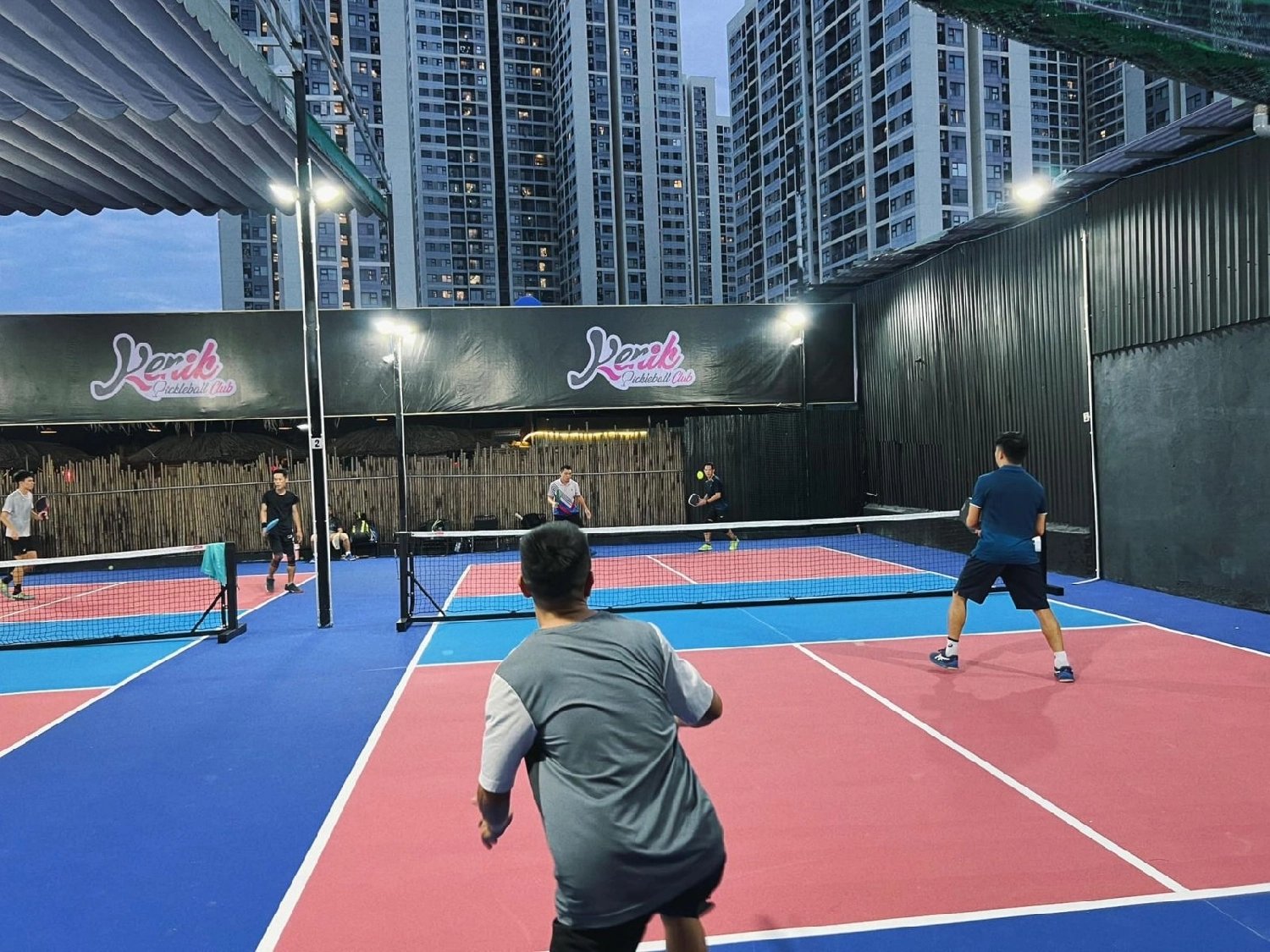
When I lived in Hanoi, there were three pickleball courts right below my apartment building. They didn't arrive at once. First there was one. A few months later, two. Then three. That's the speed this sport is moving in Vietnam.
Because my job took me all over the country, I watched it happen city by city. An office car park would be repainted with court lines. An old warehouse would get a bamboo roof and turn into a covered court. On tours to Sapa I found a court on the side of the mountain. In Mai Chau, there was one at the very end of a village, surrounded by big trees and bamboo. If you'd told me a few years ago that I'd find pickleball in Mai Chau, I wouldn't have believed you.
For the numbers behind the boom, see our piece on Vietnam's pickleball boom.
Why playing in Vietnam is different
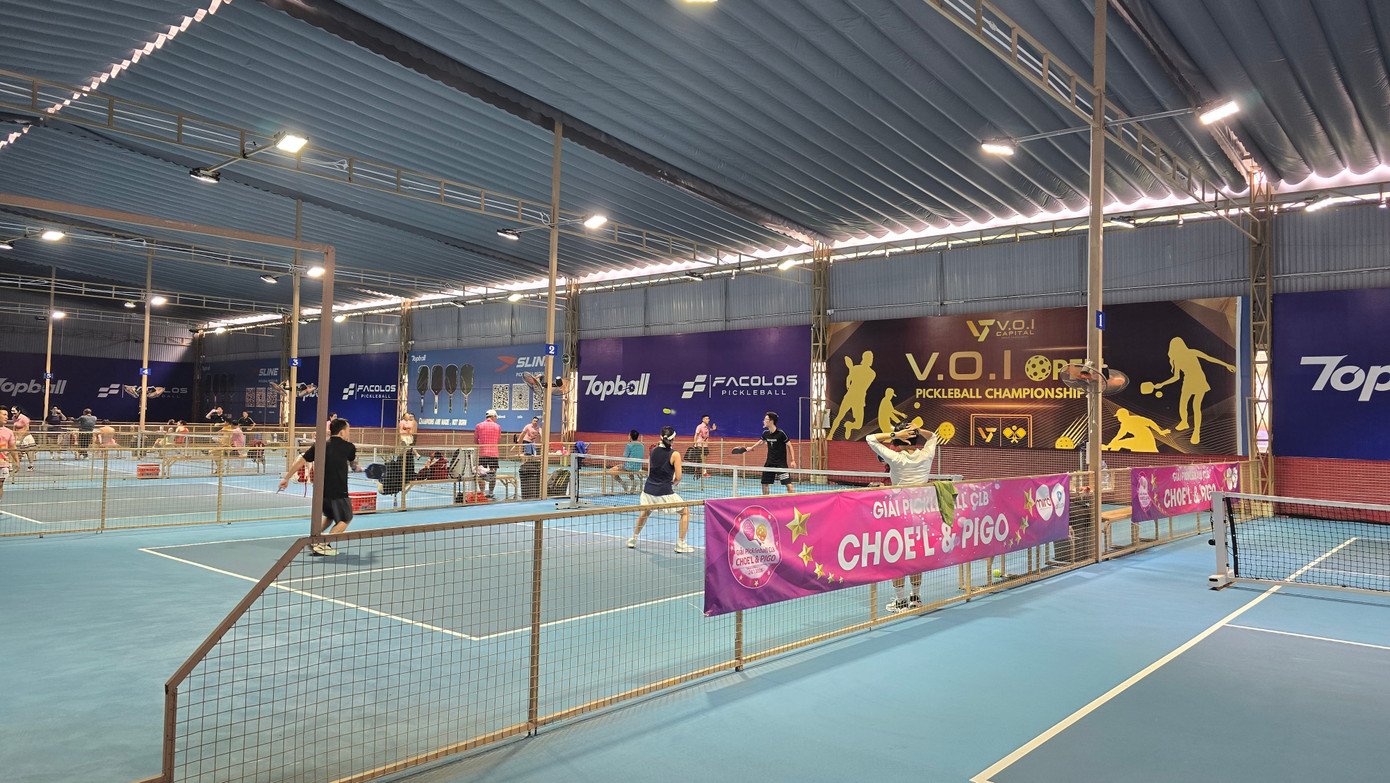
- The courts are everywhere, and new. Car parks, warehouses, rooftops, the edges of villages. Many are only a year or two old.
- It's cheap. A court costs about 150,000 to 350,000 VND an hour, depending on the place and the time. Split between four players, or paid as a small drop-in fee with a group, it's a few dollars each.
- Everyone plays. Teenagers, retirees, and above all office workers who care about their health. The moment work finishes, they head to the court.
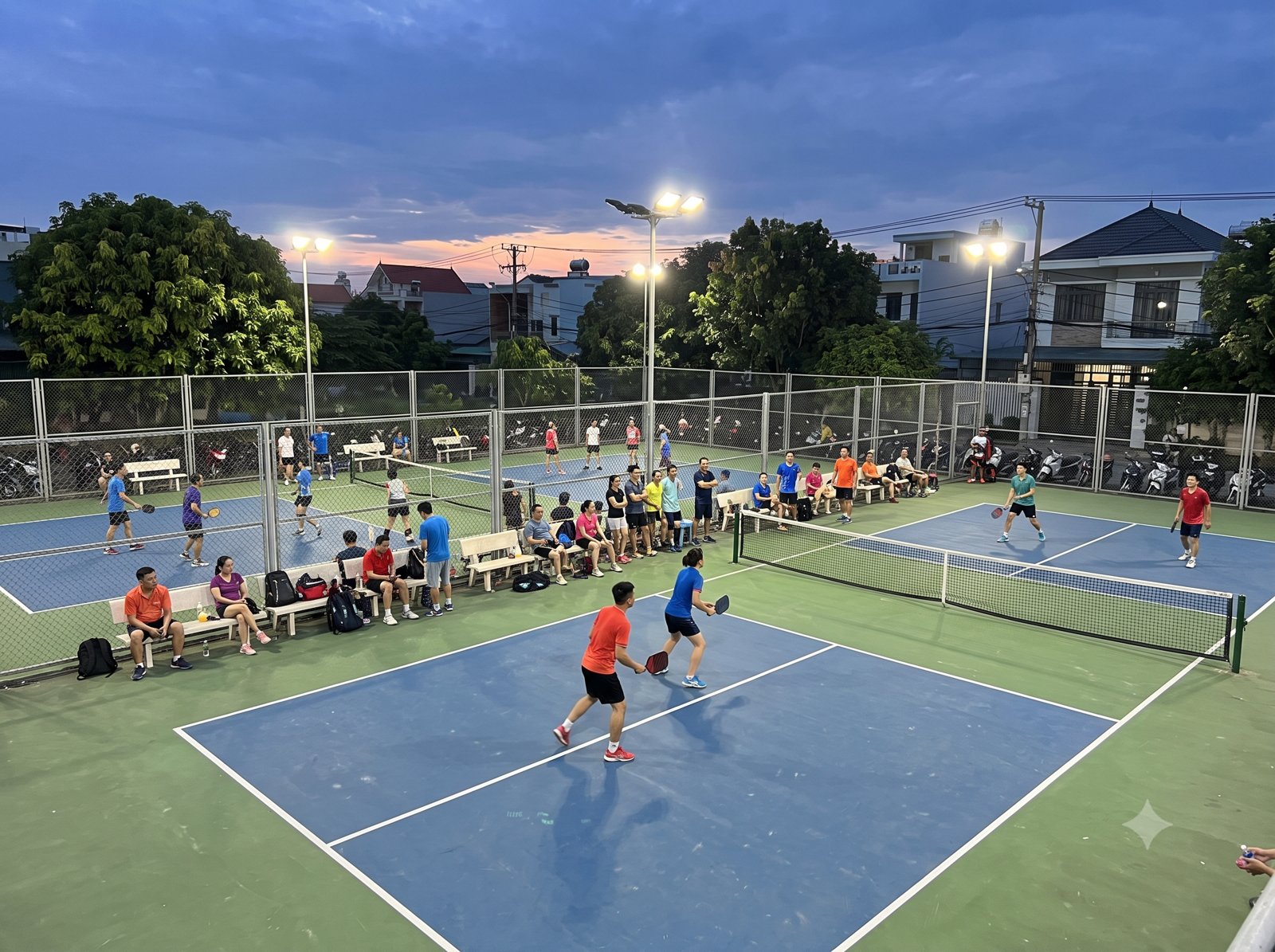
- It's an evening sport. Because so many players come after work, a court in the late afternoon or evening almost never lacks a game. You'll rarely wait long for a slot.
- Groups make it better. Regulars have their own Zalo groups. Inside a group, everyone knows each other's level, so the games are close and fun. Join one and you'll get better games and real friends.
The American couple who started this website

As a guide, I've always looked after my health on the road. For years my habit was swimming and the gym: every big city has a pool and a gym, or a beach. Once I got hooked on pickleball, the paddle came with me too. It fits easily in a backpack. I never hired a coach. In every city, between about 5:30 and 7pm, I'd walk to the nearest court, ask to drop in, and play. My level slowly went up, one city at a time.
In January 2026, an American couple booked a trip with me. Before they arrived, their first question wasn't about Ha Long Bay or the food. It was: "Are there pickleball courts in Vietnam?"
I wrote them a long answer and admitted that I play every week too. I told them not to worry about bringing paddles, because a good one costs about US$20 to US$25 here. They took my advice, landed in Hanoi, and bought paddles and balls at a shop near their hotel.
We travelled together for 18 days, and they played in almost every city. I played with them in Hue, in Hoi An and in Nha Trang. At the end of the trip, they gave me their paddles as a gift, along with an idea: build trips around pickleball and travel in Vietnam.
That's why this website exists. After ten years as a guide, I know the places, the food and the logistics inside out. Adding pickleball to a trip was the easy part.
How a session actually works here

There are a few ways to play in Vietnam:
- Social sessions: the court owner opens a session, people sign up or turn up, and everyone rotates through doubles games.
- Drop-in: what I do. You go to a court where a group is playing and ask to join them. In Vietnamese slang this is often called xé vé, buying a single "ticket" for the session.
- Private booking: you rent a court by the hour for your own group.
- Training and tournaments: coaching sessions and local tournaments, for when you want something more serious.
A drop-in works like this. Games are doubles, usually to 11 or 15 points. The losing pair steps off and the next pair comes on. The court fee is shared per person, and the busiest slot runs from about 5pm to 9pm.
The most important thing to know: nobody minds you asking. Vietnamese people are hospitable and love to meet new players, especially from abroad. In my experience, nobody has ever looked annoyed when a stranger asked to join. It's exactly the feeling I try to give my guests: just ask to play, and you'll be welcome.
Where I've played, city by city
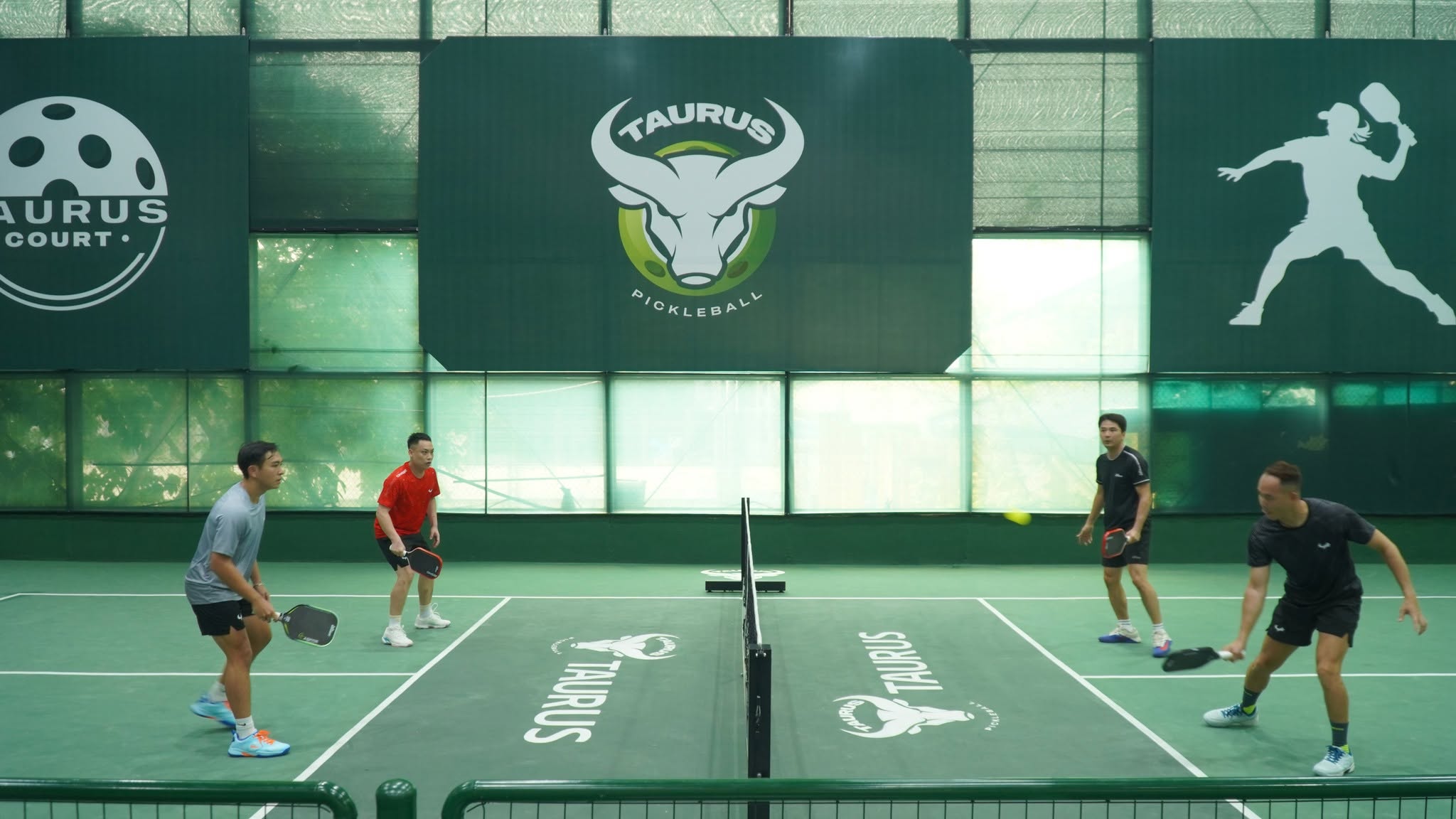
These are courts I've played on myself. Each name links to Google Maps. There are many more in every city, and our detailed guides list others.
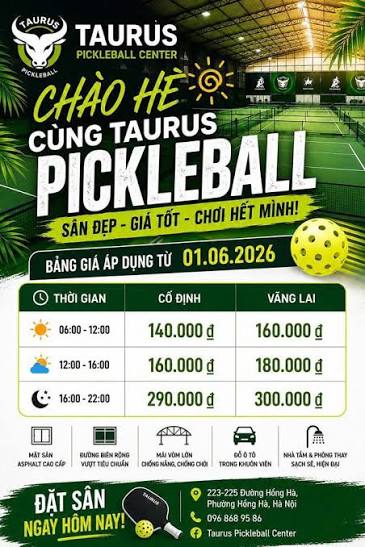
Hanoi: Taurus Pickleball
Hanoi has more courts than I can count, and new ones open all the time. Taurus Pickleball is one I know well. For more clubs, see where to play pickleball in Hanoi.
Sapa: Sapa Center Pickleball Club

Sapa Center Pickleball Club sits on the mountainside, so you play with the hills all around you. It gets cold in winter, so bring a layer. Our Sapa guide covers the rest of the town.
Mai Chau: Pickleball CĐN Mai Chau
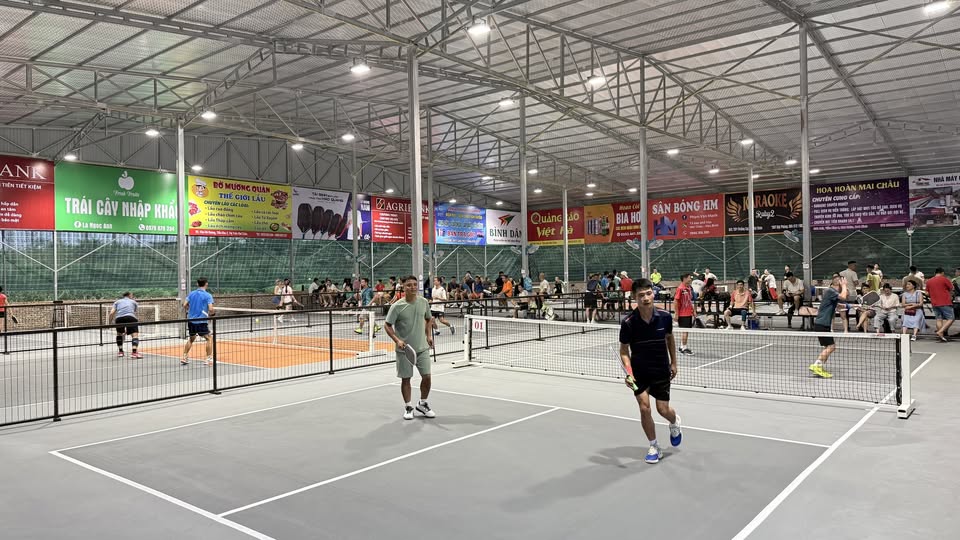
Pickleball CĐN Mai Chau is at the end of a village, surrounded by big trees and bamboo. It's the most peaceful place I've ever played, and a lovely surprise in the middle of a valley trip.
Hue: Hue Viet Pickleball
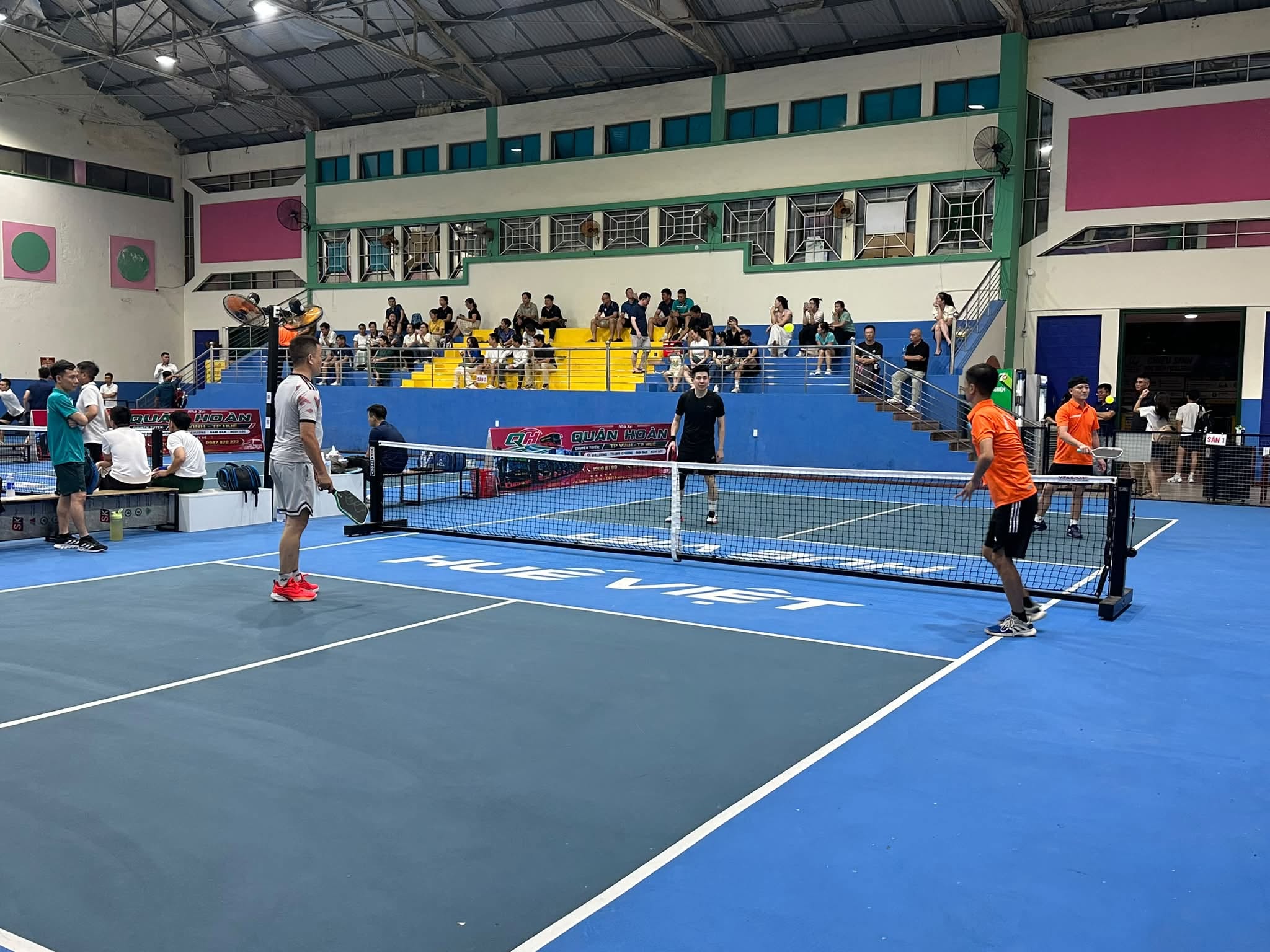
Hue Viet Pickleball is where I played with the couple who inspired this website. Hue has more courts than most visitors expect; our guide to whether Hue is worth visiting lists a few more.
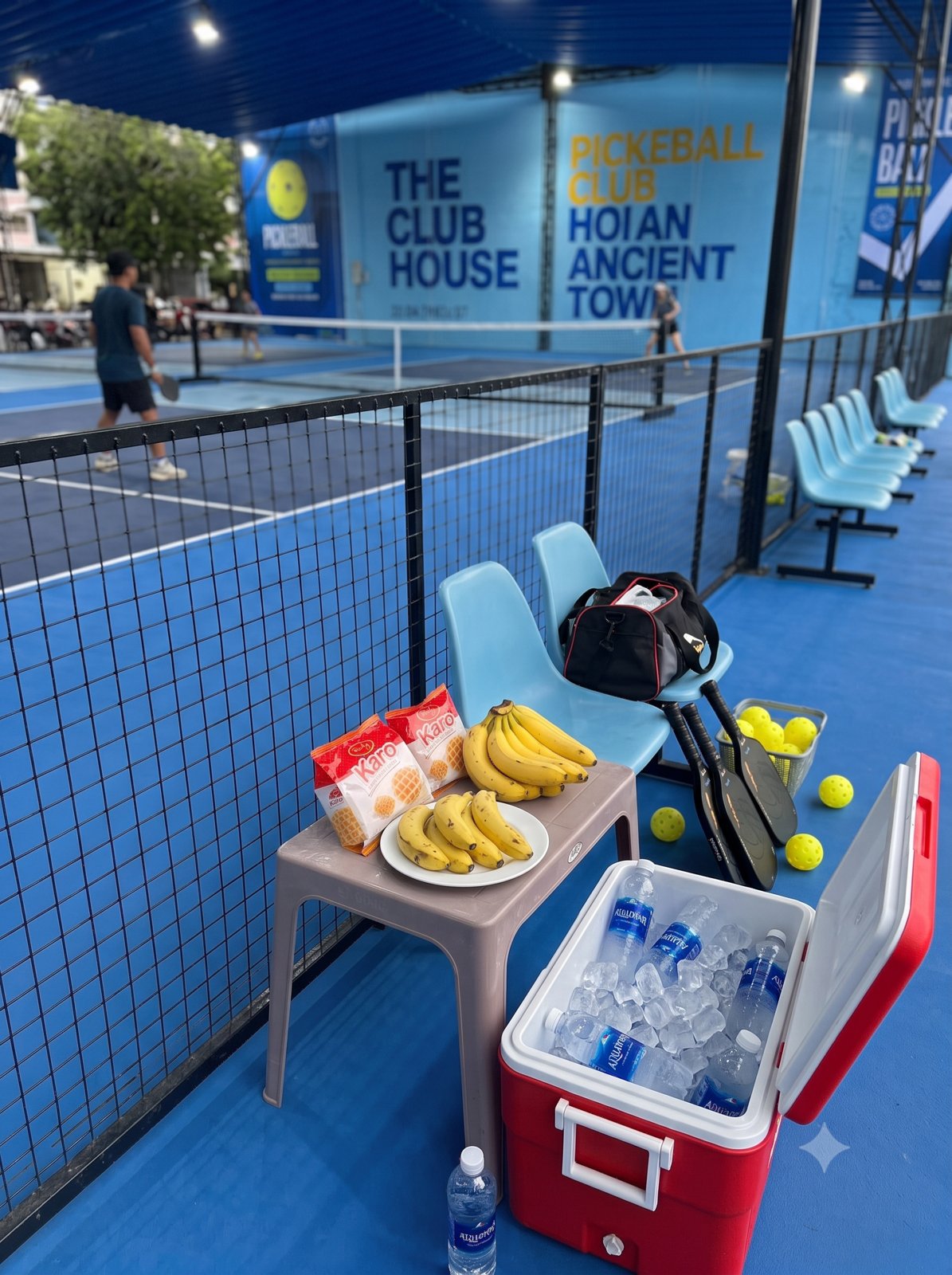
Hoi An: The Club House Pickleball
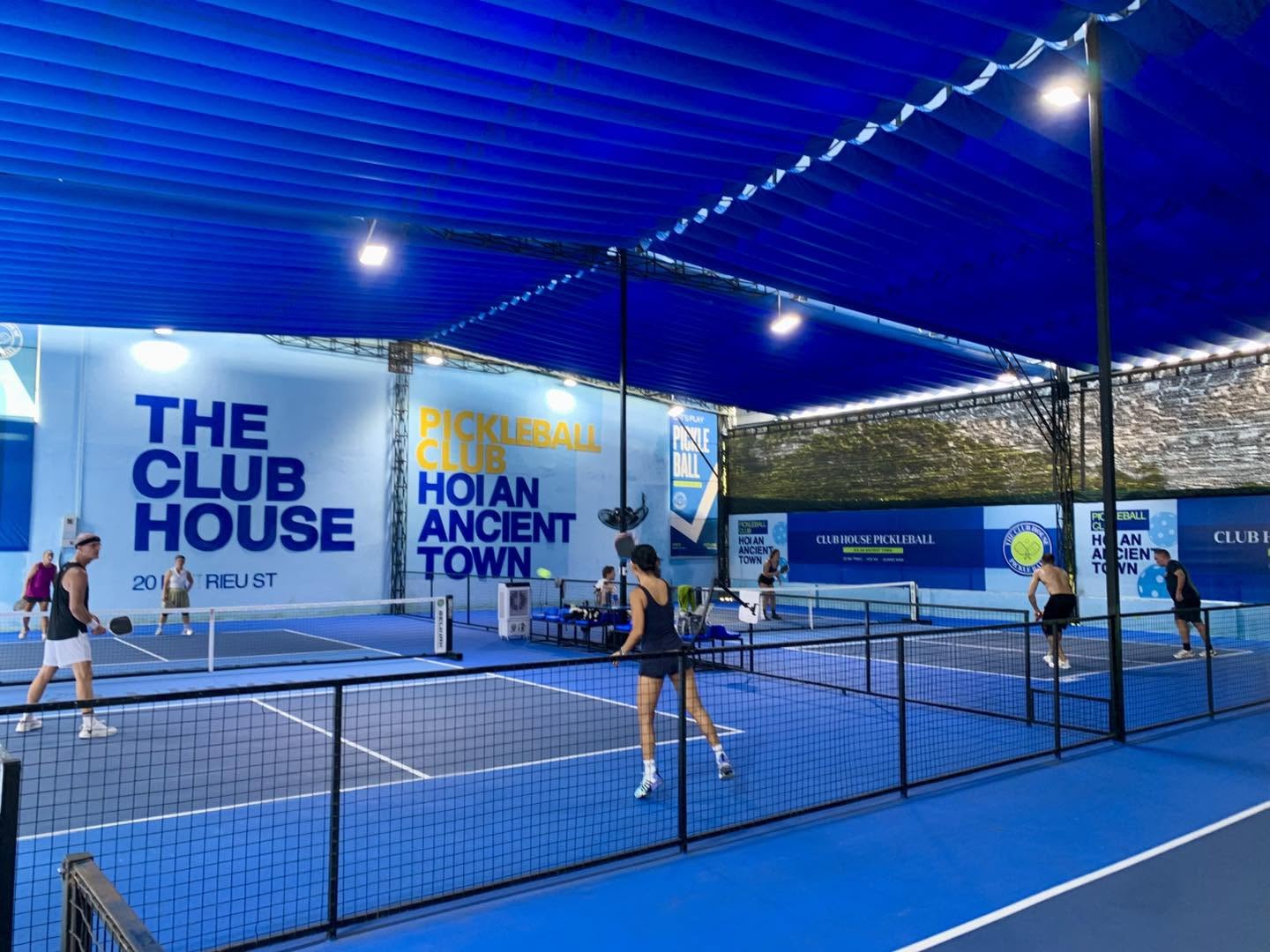
The Club House Pickleball Hoi An is an easy ride from the old town, and our guide to pickleball in Hoi An lists the other courts in town. Da Nang is half an hour away and has the busiest scene in central Vietnam; see where to play pickleball in Da Nang.
Nha Trang: Da Quoc Pickleball

Sân Pickleball Đa Quốc in Nha Trang was another stop on that 18-day trip. A morning swim, an evening game: Nha Trang is made for it.
Saigon: Pickleball PickUp
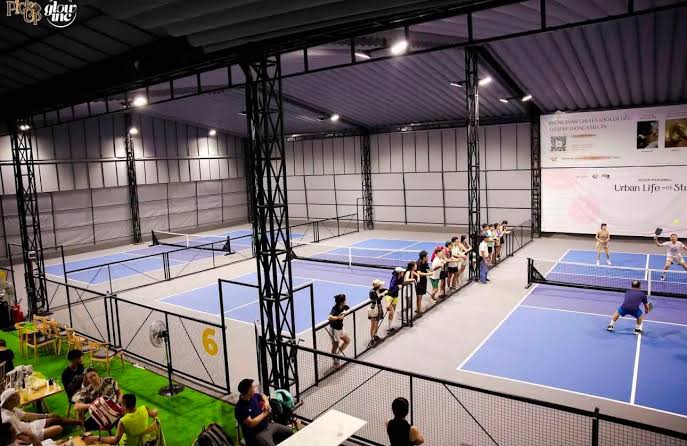
Pickleball PickUp is one of the Saigon courts I've played at. The city has a huge scene; our guide to pickleball in Ho Chi Minh City covers the bigger clubs.
How to join a game as a visitor, step by step
- Pick a court. Use the list above or our city guides. Aim for the evening, between about 5:30 and 7pm, when groups are starting.
- Talk to the owner. Walk up to the front desk and ask if a group is playing. This is exactly how I got into my first group in Hanoi: I asked the owner, she told me a group started at 7pm and said she'd introduce me. I played that night, asked for their contact, and they added me to their Zalo group.
- Pay and ask about drinks. Pay the drop-in fee to whoever the owner points to. Some places include water, others sell drinks at the counter.
- Tell them your level. In Vietnam we describe level in years, not ratings (more on that below).
- Play, then stay for the photo. More on that below too.
Vietnamese phrases to use at the court
- "Tôi là khách du lịch, tôi muốn giao lưu với người địa phương. Có nhóm nào đang xé vé không? Cho tôi tham gia với, cảm ơn!"
I'm a visitor and I'd love to play with local players. Is any group taking drop-ins? Can I join? Thank you! - "Giá bao nhiêu, và đóng tiền cho ai?"
How much is it, and who do I pay? - "Giá đó có bao gồm nước không?"
Does that include water? - "Nhờ bạn giới thiệu tôi với nhóm được không? Tên tôi là ..."
Could you introduce me to the group? My name is ... - "Tôi chơi được hai, ba năm rồi."
I've been playing for two or three years.
Not confident about any of this? Message us on WhatsApp with the city, the day and your level. I have groups at the courts I've played, and we'll find you local players to join.
Zalo, not apps
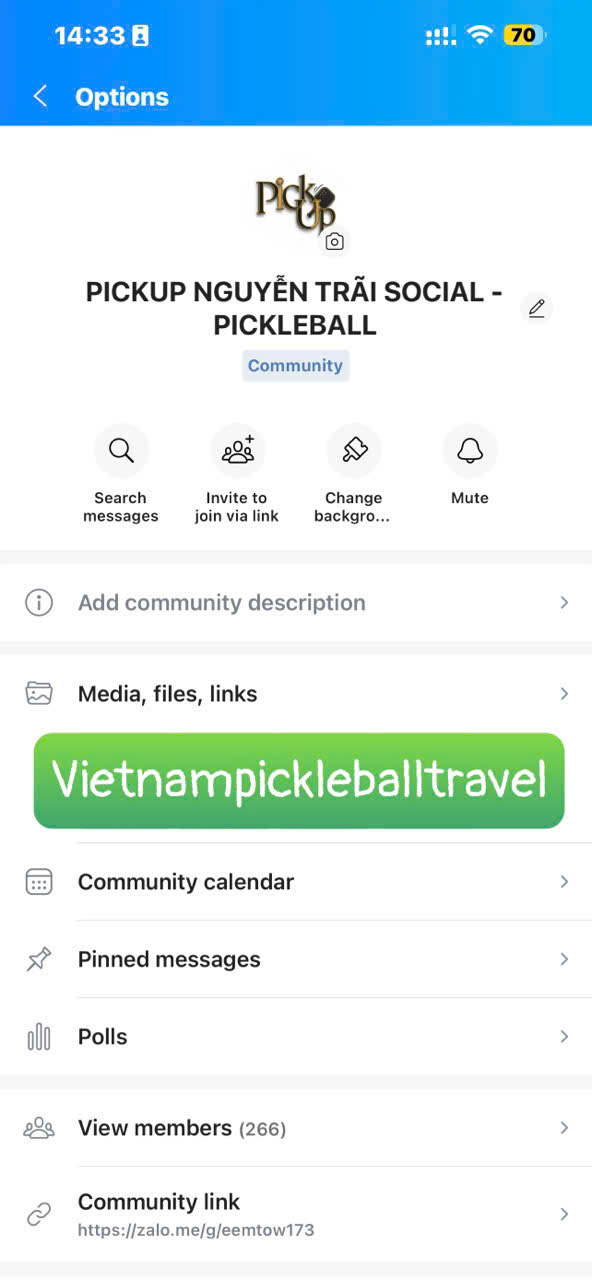
You'll read online about booking apps like Reclub or Alobo. They exist, and some clubs use them. But speaking as a local, Zalo is what really runs pickleball here. Every Vietnamese person has Zalo, and every group of regulars has its own Zalo chat. It's quicker and simpler than any app: someone posts "7pm tonight, two spots", and it's done.
The catch for visitors is that these groups are in Vietnamese and you have to be added by someone. That's where we come in. Tell us where you'll be, and we'll connect you. Our guide to SIM cards and Zalo explains how to set up Zalo before you travel.
"Am I good enough?" How Vietnamese players talk about level
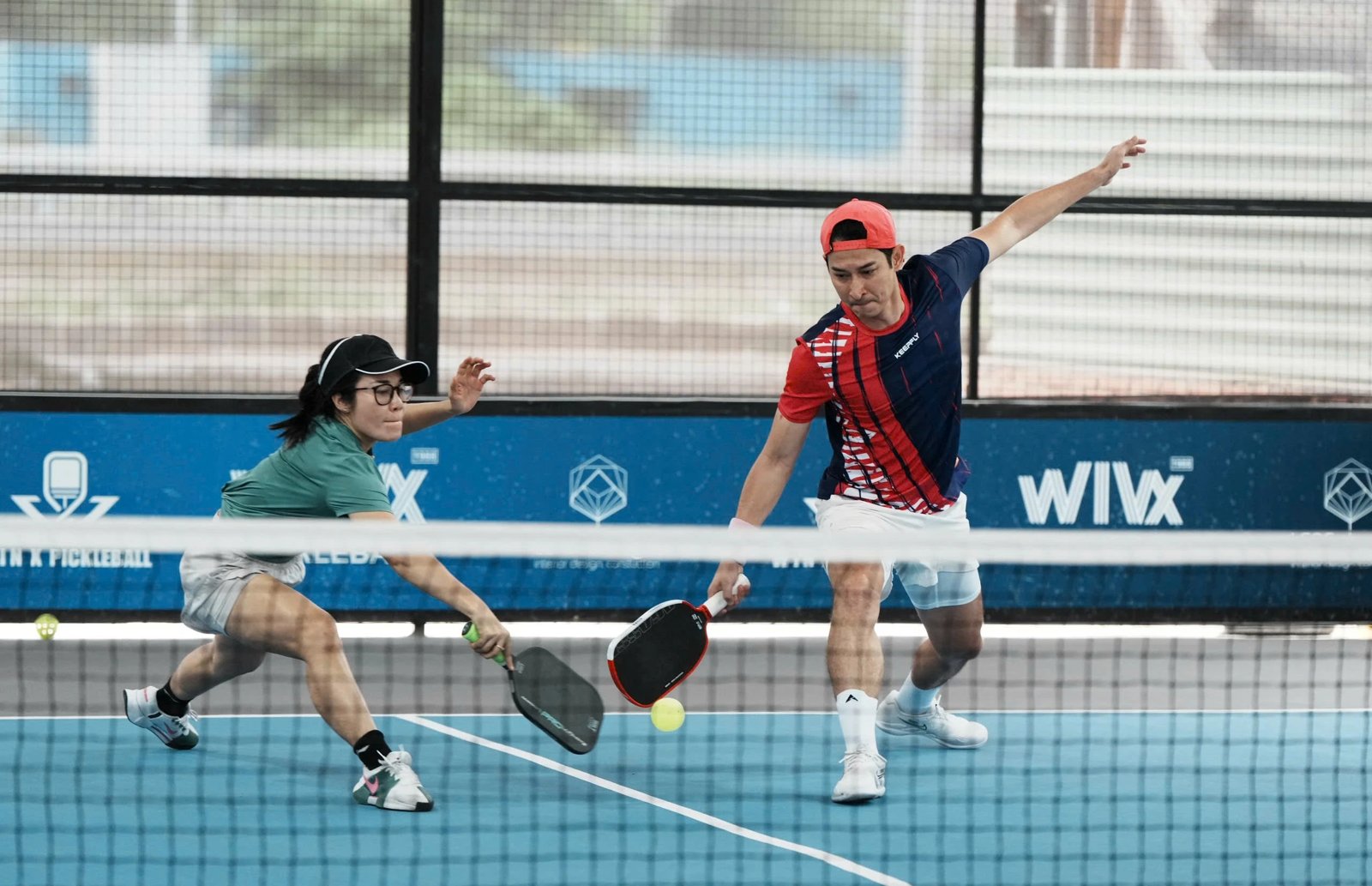
Most Vietnamese players don't use DUPR. Some serious and professional players do, but on a normal evening nobody asks for your rating. Instead, we talk in time: "I've been playing a year", "two or three years". Everyone works out the rest from that, and from the first few rallies. My own level is "a bit over a year". I've never had a DUPR rating, and nobody has ever asked me for one.
There usually aren't separate sessions for beginners. Levels mix, and new players tend to pair up with other new players and just play. Nobody shouts or gets annoyed. For most of us, this is how we relax after work. Competition is a different thing, and it happens at tournaments.
Here's a story about how friendly it is. When I was new, I didn't know how to reset the ball. One regular, a guy who loved to tease everyone in a good way, worked out that whenever he wanted a point, he could hit at me and win it. So I went home, watched YouTube, and practised resets for two sessions at another court. A week later I was back on his court. He aimed at me again, and I blocked five smashes in a row. We won 11 to 7. He couldn't believe how fast I'd learned, and we laughed about it for the rest of the night.
Court culture: food, replays and the group photo
- Close call? Replay it. If nobody's sure whether a ball was in or out, we just replay the point. There's no camera and no point arguing.
- Good shots get celebrated, loudly, by both teams.
- There is always food. Iced tea and lemon tea, of course, but also bananas, banh mi, and sometimes a whole plate of roast pork being passed around between games. Don't be surprised if you're offered some.
- Older players are tough. Never underestimate the uncle with the slow walk. He'll put every ball where you aren't.
- Visitors get a warm welcome. Many players will want to chat, partly because they're friendly and partly to practise their English.
- The group photo. When the session ends, everyone gathers for a photo, and it'll be on Facebook that night. It's part of Vietnamese culture. Stay for it.
Time of day and weather
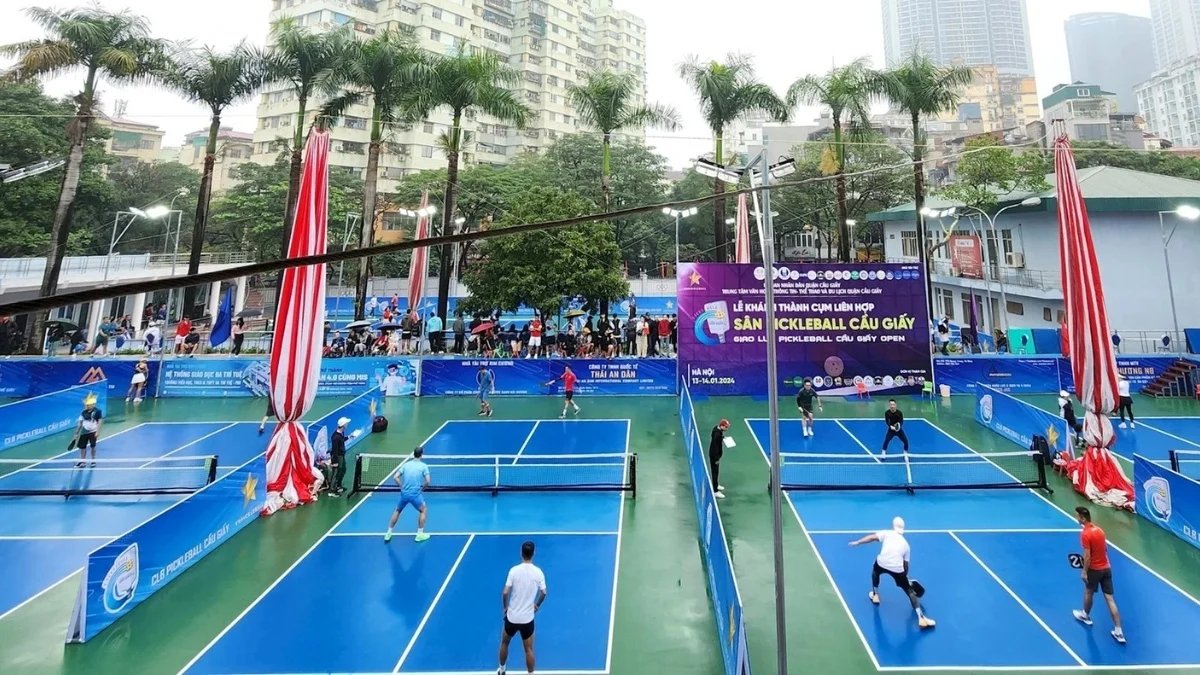
Honestly, the weather matters less than you'd think. Whatever the season, the courts are full in the late afternoon and evening after work. That's the safest time to find a drop-in.
- Early morning: fewer players, but there are always some. Outdoor courts are lovely then: you sweat it out, go home, shower and start your day. I rarely play mornings myself, so if you want a morning game, ask the group admin whether they're running a drop-in. If not, you can always rent a court and play with your own partner.
- Afternoon and evening: mostly indoor or covered courts, out of the sun and rain.
For the heat in the south and the central coast, read our tips on playing pickleball in the heat.
What to bring, and what to buy here

- Your paddle: I'd bring it if you have one you love. It travels easily in a backpack.
- Court shoes: non-marking, and comfortable for a few hours.
- Balls: leave them at home. Every court has balls.
- Forgot your paddle? A decent paddle costs about US$20 to US$25 in Vietnam, and most cities have sports shops near the centre.
For clothes, see what to wear for pickleball in Vietnam. And if you want a gift to take home for your playing friends, our unisex pickleball tees are designed here.
The honest downsides
- The language barrier. In smaller cities, many players speak little English, so a lot of the conversation happens through smiles and gestures. That's fine: everyone has a smartphone and everyone knows the rules, so Google Translate covers the rest. If you travel with us, our guides know the game and handle all the talking, so there's no pressure.
- Some sessions are disorganised. Levels can be uneven and the rotation can get messy. Just keep playing. The good players naturally find each other, and as a foreign visitor, people will be keen to play with you anyway.
- Drop-ins are mainly in the evening. If you only have a morning free, you may need to rent a court rather than join a group.
- Indoor courts are loud. Lots of games under one roof means lots of noise. Covered open-sided courts are calmer.
Older players, women and solo travellers

Don't worry. Vietnam is a safe, welcoming place for visitors, and pickleball courts are some of the friendliest places in the country. People of every age play together, and women play as much as men.
On our trips, a guide is always with you to handle introductions and communication. But I'd still encourage you to start a conversation yourself. Anyone who speaks a little English will love to chat. For more, read travelling solo as a pickleball player over 50.
Every guide on this site, in one place
This page is the overview. When you want the detail, these are the guides I'd send a friend.
Where to play, city by city
- Pickleball in Hanoi: the courts, the clubs and how to get a game
- Pickleball in Da Nang: Vietnam's pickleball city
- Pickleball in Hoi An: covered clubs near the old town and resort courts on the beach
- Pickleball in Ho Chi Minh City: where Saigon plays, and when
- Resorts with pickleball courts: if you'd rather walk from your room to the court
Planning the trip
- What a pickleball trip to Vietnam costs, with a real 10-day budget
- Why Vietnam belongs on your pickleball vacation list
- Lessons and coaching: prices and how to book
- Entering a tournament as a visitor
- Flying with your paddle on Vietnam Airlines and Vietjet
- What to wear and how to handle the heat
- Court words and phrases in Vietnamese
- Sore after a game? Massage, pharmacies and doctors
- When your partner doesn't play
Let us sort it for you
- Private trips with the courts already booked: Hanoi, Ninh Binh & Ha Long, Da Nang & Hoi An, Top to Bottom and Valleys to the Bay
- A tailor-made trip built around your dates and your level
- Club trips for 6 to 24+ players, with games against local clubs
- Just landing? Airport pickup in Hanoi, Da Nang and Saigon, including Noi Bai to the Old Quarter, Da Nang Airport to Hoi An and Tan Son Nhat to District 1
Playing pickleball in Vietnam FAQ

Can you play pickleball in Vietnam as a tourist?
Yes. Go to a court in the evening, ask the owner if a group is playing and ask to drop in. Vietnamese players are very welcoming to visitors.
How much does pickleball cost in Vietnam?
Courts rent for about 150,000 to 350,000 VND an hour (roughly US$6 to US$14). If you drop in with a group, you pay a small share per person.
When is the best time to play pickleball in Vietnam?
Late afternoon and evening, roughly 5pm to 9pm, when people come straight from work and courts are full. Early mornings are quieter.
Do Vietnamese players use DUPR?
Mostly not. Players describe their level by how long they've played, like "one year" or "two or three years", and work out the rest on court.
Should I bring my own paddle to Vietnam?
If you have one you love, yes. Otherwise a decent paddle costs about US$20 to US$25 here. Balls are always provided at the court.
How do I find a pickleball group in Vietnam?
Most groups organise on Zalo, in Vietnamese. Ask the court owner to introduce you, or message us on WhatsApp and we'll connect you with local players.
The bottom line

Playing pickleball in Vietnam is easy, cheap and one of the best ways to meet local people. Find a court, turn up in the evening, ask to join, and stay for the photo. Bring your paddle, leave your balls at home, and don't worry about your rating. If you'd like help finding a game, message us. And if you'd like the whole trip built around your game, with courts, local players and a guide in every city, we can plan a private trip for you, or take a look at our Top to Bottom trip.
Find a game in Vietnam
Join Pickleball in Vietnam, our free Facebook group. Ask about courts, find a morning game and swap tips with players who live here.
Join the group